
Biochar
Biochar is charcoal that is used for environmental applications, e.g. application to soil or water filtration. The process that is used for biochar production is called pyrolysis which is a treatment at high temperatures (typically 350-750°C) in an atmosphere with no or limited oxygen. The only visible change after pyrolysis is a blackening of the material and a slight reduction in size.
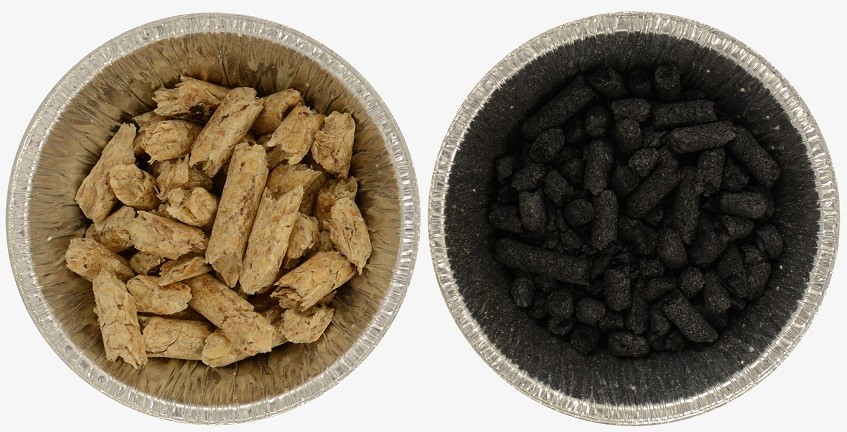
Picture taken by Ondřej Mašek

However, while charcoal is only made from wood, biochar is made from any biomass. Here are some examples for biomass that has been used for production of biochar at the UK Biochar Research Centre: Left column to right column: wheat straw, anaerobic digestate from biomass residues, paper mill sludge, paper-plastic composite (bakery wrap), sewage sludge, demolition/waste wood, cardboard, willow wood, spent coffee grounds, coffee cups, pine wood, softwood pellets, wool (Scottish Bourmount, Scottish mule, Blue face Leistea, Scottish Black face, Anglo-Saxon merino), anaerobic digestate from food waste, rice husk, algae (Laminaria Hyperborea stem, brown algae/kelp).
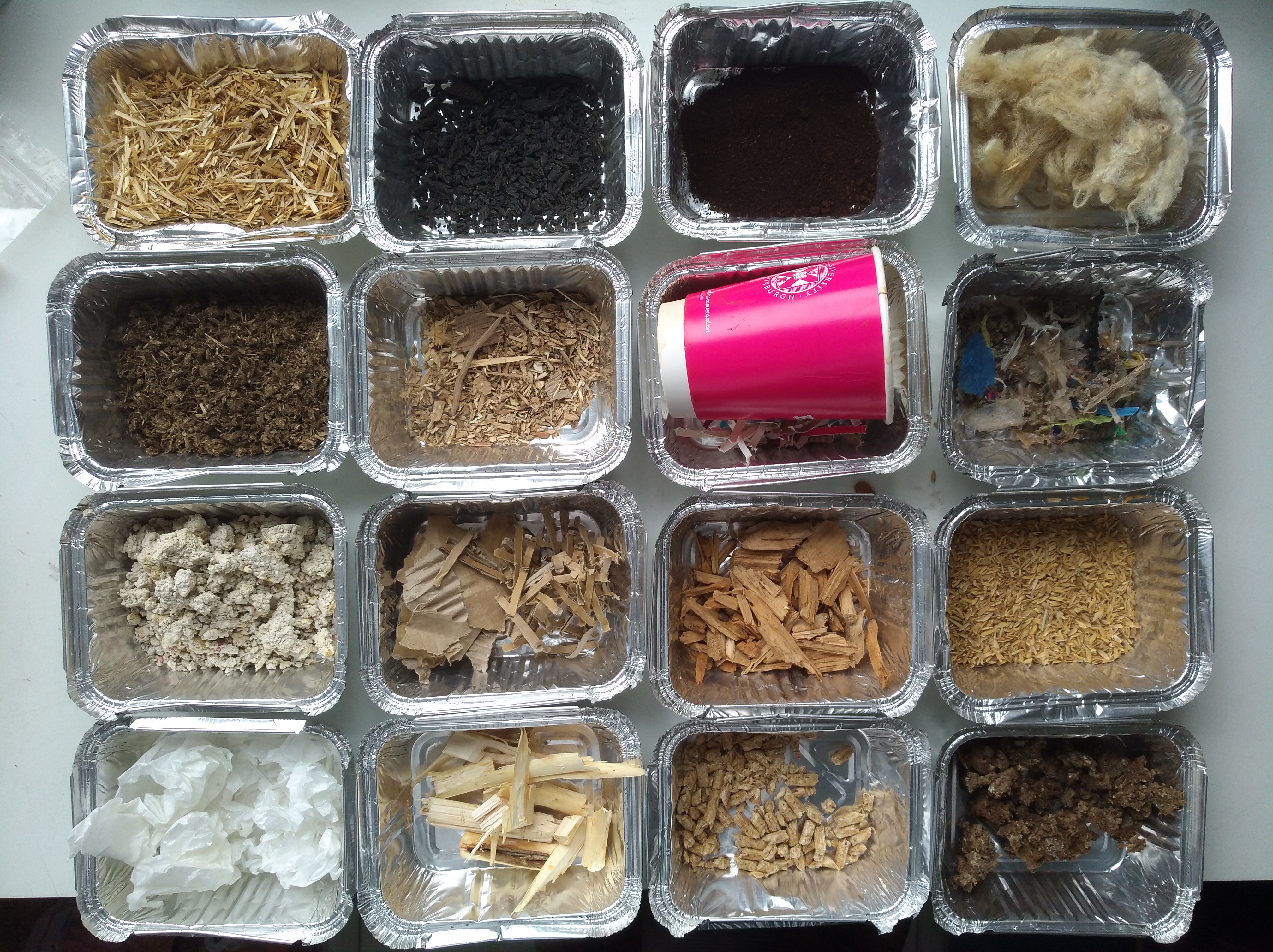
Depending on the feedstock material and the production conditions biochars can have very different properties. Some biochars contain very high concentrations of nutrients and can directly be used as fertiliser, other can be used to improve soil properties, filter nutrients/pollutants from waste water, remediate contaminated soil or improve the composting or biogas production process. Biochar can be engineered depending for which purposes it should be used for.
The carbon in biochar is very stable against chemical and microbial degradation and therefore, when applied to soil remains much longer than the carbon in the respective feedstocks. This feature of biochar is very important because it enables biochar to be used for sequestering carbon in soil and hence mitigate climate change.